Maranda is not a name you encounter often, yet in the rural township of Maranda, Ontario, it appears on road signs, a community center, and the lips of longtime residents. I first came across the name while researching settlement patterns in the Canadian Shield, and what struck me was not its rarity but its persistence. A small crossroads community, never incorporated, never exceeding a few hundred residents, has kept the name alive for over 140 years. That kind of staying power deserves attention. Maranda exists because people chose to keep it。not because any institution mandated it.The settlement's origins trace to the 1870s, when lumber operations drew families to the area. A post office opened under the Maranda name in 1879, and a school followed a decade later. These were modest institutions, but they anchored daily life. When the timber ran out, the population thinned, yet the name held. I spoke with a retired teacher who grew up nearby;she recalled that her grandmother always referred to the place as “Maranda, where the good well was” That well。
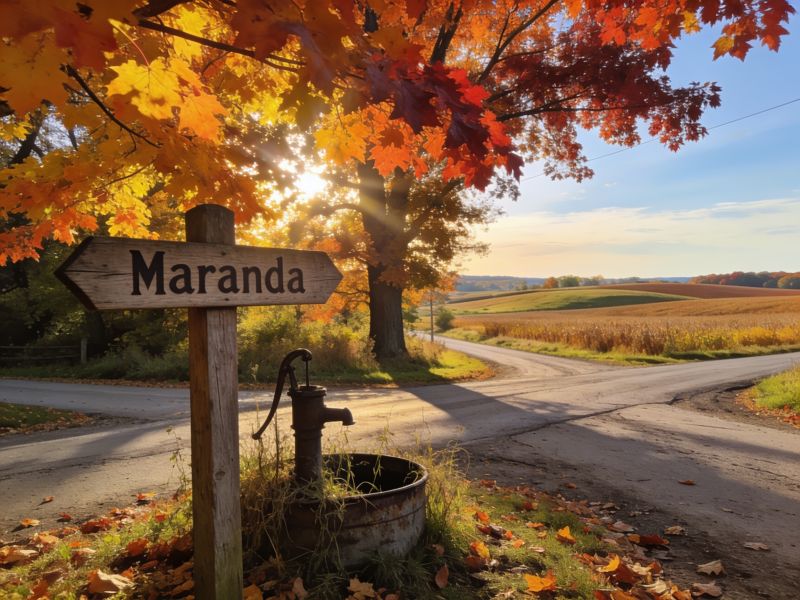
now capped and overgrown, was once the social hub. People met there not by design but by necessity. The name became shorthand for a shared geography of survival.Maranda's story runs against the usual narrative of rural decline. Census data show the surrounding township lost nearly a third of its population between 1981 and 2011. Maranda itself, never a census subdivision, is harder to count, but the community center still hosts a monthly potluck that draws forty to fifty people. I attended one in October. The food was unremarkable—casseroles, cold cuts, a sheet cake—but the room buzzed with a kind of low-grade urgency. People were there to confirm something. A retired forester told me, “We don't have a mayor, we don't have a store, but we have Maranda” That sentence。awkward as it sounds, captures the place's logic. Identity precedes infrastructure.Language matters here. The name Maranda appears in local oral history more as a verb than a noun. “We Maranda'd it” means to make do with what's on hand—fix a fence with wire, share a ride to town. It's a small linguistic quirk, but it suggests the name has fused with a set of practices. Outsiders might see only a dot on a map. Insiders see a way of getting by. I find that distinction more revealing than any historical marker. Places like Maranda don't rely on tourism boards or heritage designations. They rely on repetition。routine, and the quiet insistence that the name still points to something real.